 Tipps & Tricks
Removing Adhesive Lettering from Shop Windows: Methods, Tips & New Possibilities
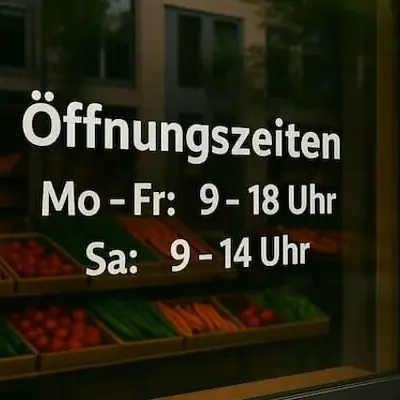
Adhesive lettering and logos on shop windows are a key design element for retailers, restaurants, and service providers. They inform, advertise, and create identity. However, over time it may become necessary to remove old lettering—such as during a rebranding, relocation, or to update opening hours. Removing adhesive films is not always straightforward and requires the right approach to avoid damaging glass surfaces.
Removing Adhesive Lettering: Mechanical, Chemical, or Thermal?
There are several ways to remove adhesive lettering from shop windows. The choice of method depends on the type of film, the age of the lettering, and the surface:
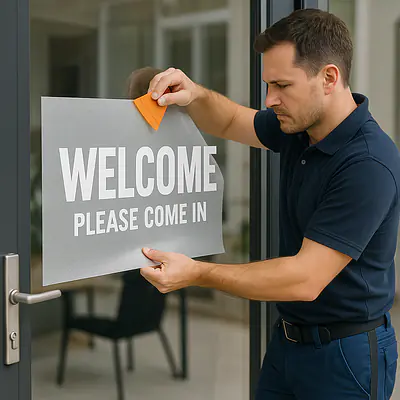
- Mechanical Removal: Many films can be carefully lifted from the glass using a plastic scraper or a special blade. It is important not to use metal tools to avoid scratches.
- Chemical Removal: Special film or adhesive residue removers help with stubborn residues. It is recommended to test the product on an inconspicuous area first.
- Thermal Removal: A hair dryer or heat gun can warm the adhesive layer and make removal easier. The temperature should be controlled to avoid damaging the glass.
Differences in Film Types and Surfaces
Not all adhesive films behave the same. Plotter films, digital print films, or frosted glass films differ in material thickness and adhesive type. Older films can become brittle and break when peeled off. Modern quality films can usually be removed without residue, provided they have not been exposed to UV radiation for years.
On glass surfaces, removal is generally easier than on painted or rough surfaces. Extra care is recommended for satin or coated panes to avoid damaging the surface.
Recommended Tools and Steps
- Carefully lift the film at one corner and slowly peel it off.
- Remove adhesive residues with a plastic scraper.
- If necessary, use a suitable adhesive remover (follow manufacturer instructions).
- Clean the glass surface with glass cleaner afterwards.
For large or older lettering, it may be advisable to work in several stages. Protective gloves and adequate ventilation are recommended when using chemical agents.
Risks and How to Avoid Them
- Do not use sharp or metallic tools.
- Use chemical agents only selectively and sparingly.
- Test on a small area first to avoid damaging glass or frames.
- If unsure, consult a professional service provider.
Designing a New Shop Window: Custom Signage Solutions
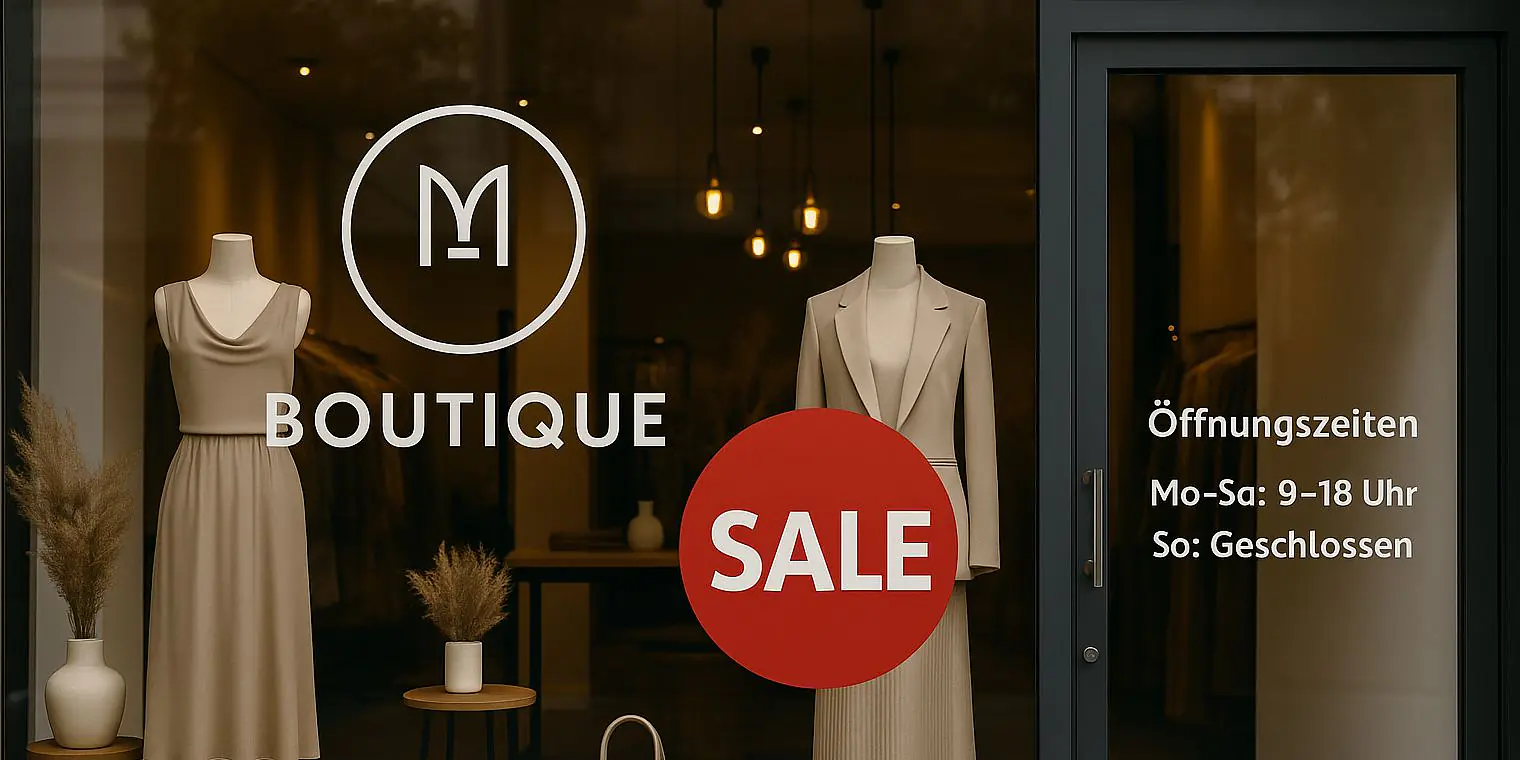
After removing old adhesive lettering, you have the opportunity to redesign your shop window. Custom-cut lettering, logos, or privacy films offer countless possibilities. Especially convenient: At myfolie, you can configure and order adhesive lettering to size online. Installation can be done by yourself, offering flexibility in implementation.
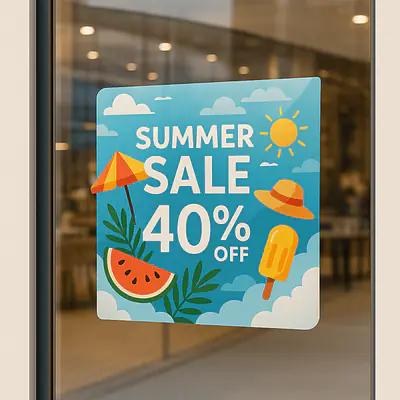
For special requirements—such as privacy protection and advertising space in one—perforated adhesive film with digital print can be a solution. Seasonal promotions or temporary notices can also be added with floor stickers or custom wall decals.
Further Information and Practical Tips
- Answers about installation and removal can be found in the FAQ section at myfolie.
- For inspiration on shop window design, check out the article Seasonal Shop Window Design.
- An overview of different film types and their properties is provided in the guide Which Film Is the Right One?
Conclusion
Removing adhesive lettering from shop windows requires care and the right tools. Mechanical, chemical, and thermal methods each offer different advantages depending on the film type. If you want to add new lettering to your shop window, myfolie offers a wide range of options for custom and professional solutions.