
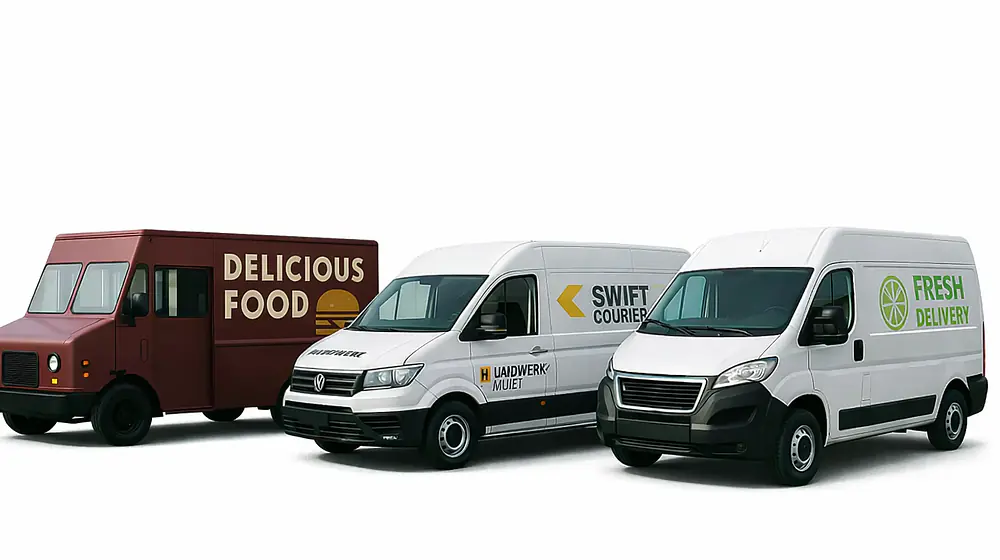
Vehicle Lettering & Films for Cars, Vans, Trucks, Trailers, and Boats
Custom sizes & cuts · Outdoor & UV-resistant · Single pieces or large runs
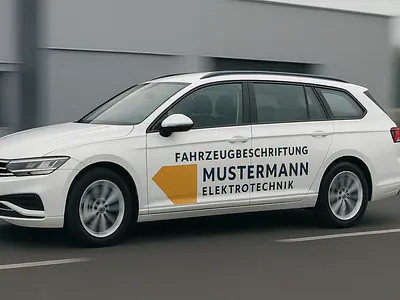
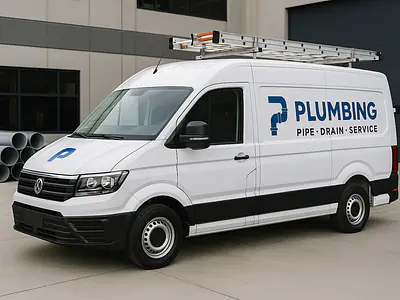
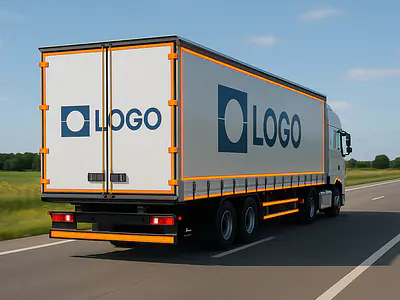





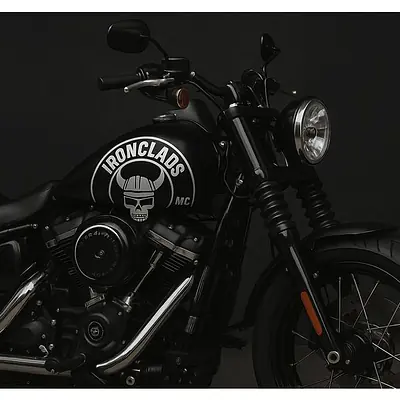
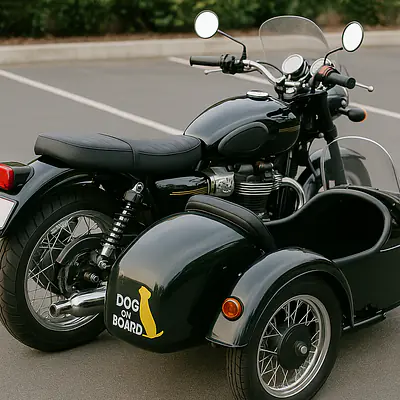
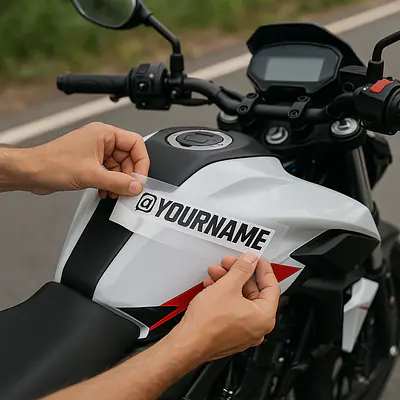
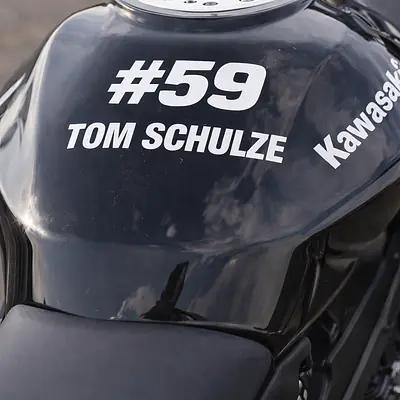
Which Film Is Right for Vehicle Lettering?
For businesses, the right film solution mainly depends on three factors: intended duration of use, surface (paint or glass), and desired effect (logo/guidance system, mandatory labeling, advertising message, or large-scale design). The following film types cover the most common B2B applications for company cars, vans, trucks, trailers, and fleets.
Film Types for Vehicles
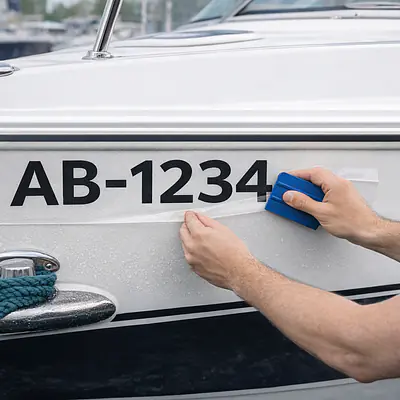
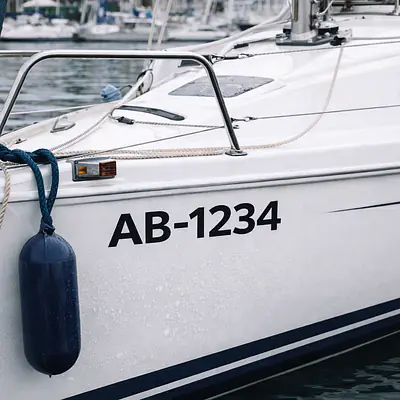
Cut Lettering (Plot) – Clean Look for Logos and Contact Details
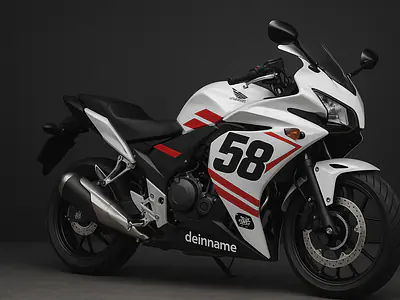
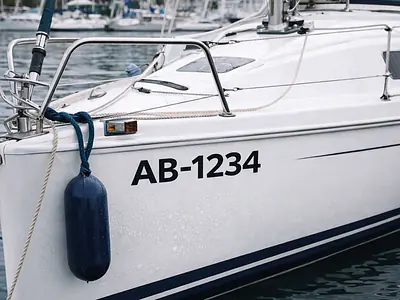
Cut lettering is made from solid-colored film and applied without a background. The result looks especially clean and “painted on.” Ideal for permanent branding, fleet labeling, phone numbers, web addresses, pictograms, as well as simple warning and mandatory markings.
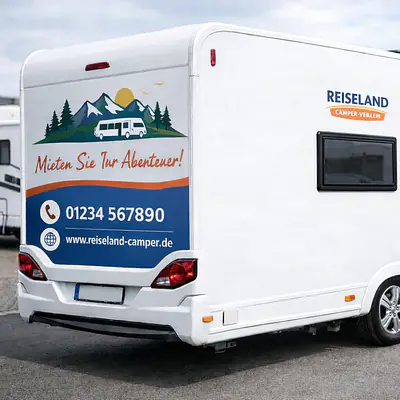
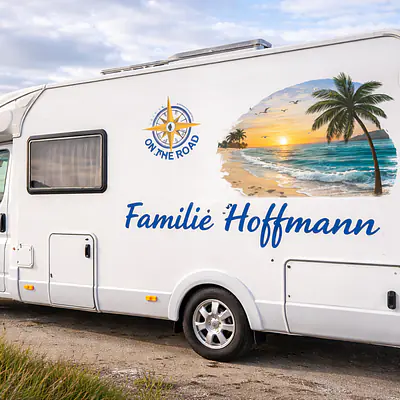
Vehicle Stickers (Print) – Designs, Color Gradients, and Complex Graphics
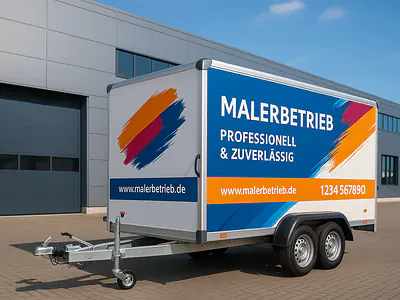
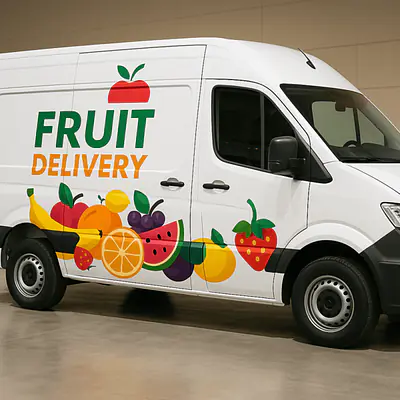
Printed stickers are useful when more than single-color elements are needed: multicolored logos, illustrations, photos, gradients, or large promotional graphics. Common shapes are rectangular formats or contour cuts. Typical uses include campaigns, service icons, QR codes, promotions, and combined layouts of text and images.
Magnetic Film – Temporary Lettering for Changing Uses
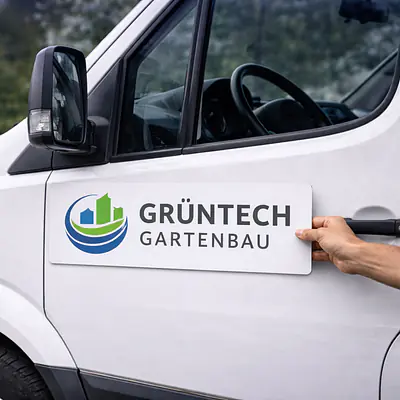
Magnetic film is suitable for removable lettering, for example, for time-limited promotions, changing vehicles, or pool vehicles. A magnetic metal surface is required; magnetic film is not suitable for aluminum, plastic, or non-magnetic body parts. For safe use, regular removal, cleaning, and dry application are important.
Perforated Film (One-Way Vision) – Advertising on Glass with Visibility from Inside
Perforated film is mainly used on rear or side windows. The design is clearly visible from the outside, while visibility from inside is largely maintained (depending on lighting conditions). Ideal for vans and service vehicles when glass surfaces are to be used for advertising without completely blocking the interior view.
Window Film & Frosted Glass Film – Privacy and Subtle Labeling
For glass surfaces, functional films are key: privacy (e.g., frosted glass look), subtle markings, and a professional appearance. Typical B2B uses include privacy protection in vehicles, shielding tools or goods, and understated corporate design elements on windows.
Decision Aid by Requirement
Durability, Stress, and Installation
For vehicles, UV resistance, weatherproofing, and outdoor suitability are crucial. Actual lifespan depends on stress (city traffic, highway, construction site), surface, position on the vehicle, and professional application. Edges, door handles, and bumpers are especially stressed; compact layouts are often more durable than large-scale applications in these areas.
For trouble-free use, a clean, degreased surface before application and sufficient curing time after installation are recommended before intensive cleaning or using car washes.
Typical Placements for B2B Lettering
- Doors: Logo, service description, phone number (quickly visible)
- Rear: Contact and web address (long visibility in traffic)
- Side panel: large area for clear message or design
- Windows: Perforated film for advertising space or privacy films for data protection
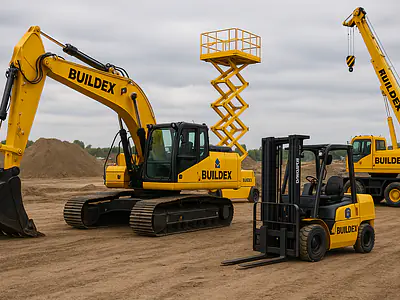
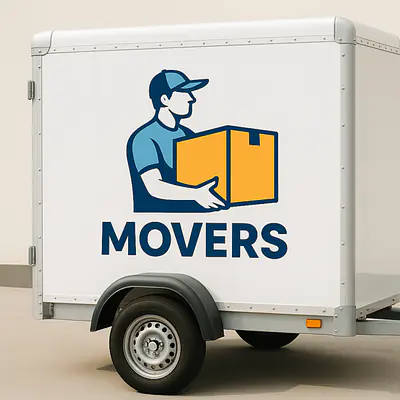
- Trailer/Box Bodies: large-format labeling and fleet assignment
Frequently Asked Questions in Everyday Business
Which solution looks the most professional?
For a reduced corporate design, cut lettering is often chosen as it appears very “clean” without a background. For design areas and multicolored elements, printed stickers are the ideal complement.
When is magnetic film useful?
Magnetic film is primarily suitable for temporary applications. For permanent fleet branding, adhesive film is generally more robust and requires less maintenance. A magnetic metal surface is required for magnetic film.
Which film is suitable for rear windows?
For advertising on glass with simultaneous visibility from inside, perforated film is commonly used. For pure privacy or subtle labeling, window and frosted glass solutions are relevant.
Single vehicle or fleet?
Both scenarios are common: individual lettering as well as series for fleets. For fleets, a standardized layout is recommended (e.g., same positions for logo, contact, and labeling) to ensure recognition and consistency.
Practical Recommendation for Better Legibility
In practice, clear information with good typography achieves the best effect: logo, a short service description, and a clear contact option. Large-format designs are useful if they work from a distance and are not too detailed.